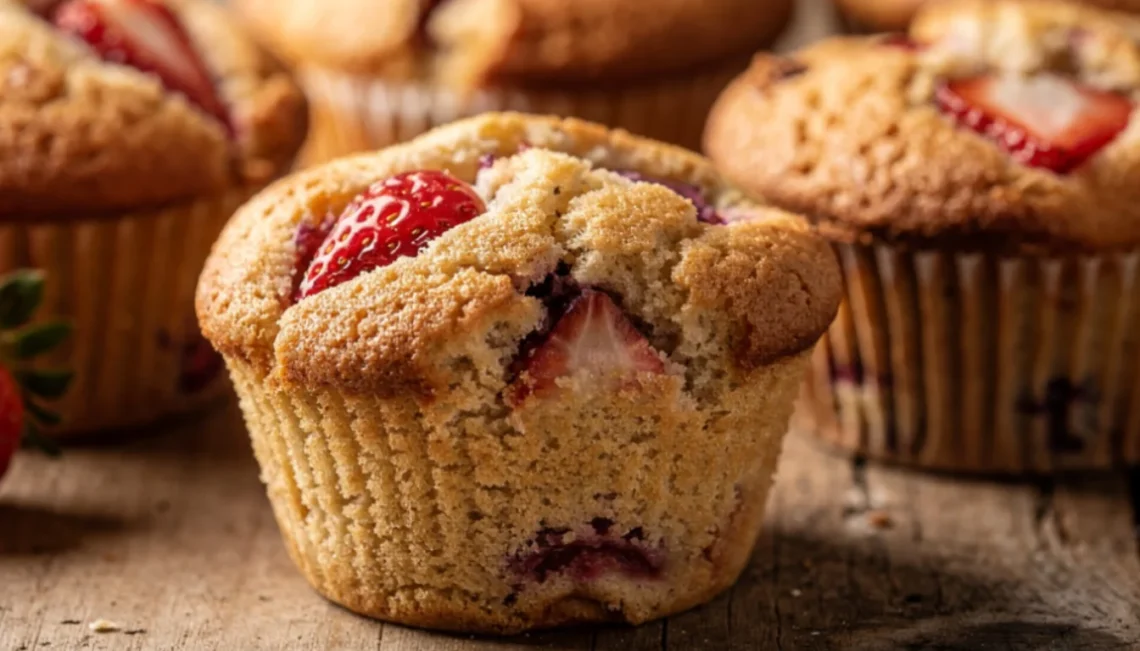
The first time I made these, I wasn’t trying to create anything revolutionary. I had half a tub of cottage cheese sitting in my fridge, a punnet of strawberries going soft on the counter, and a big bag of almond flour I’d bought weeks earlier for a recipe I never got around to making. Classic me. I figured I’d throw something together, hope for the best, and if it failed, well, nobody had to know.
What came out of the oven that morning completely stopped me in my tracks.
My daughter tried one before they’d even cooled properly and asked if we could have these every weekend. My husband, who is deeply suspicious of anything I describe as “high-protein” or “gluten-free,” went back for a second one without asking what was in them. That’s honestly the highest compliment he gives.
I’ve been baking with almond flour for almost ten years now, and these cottage muffins have become one of my most-made recipes. They’re soft, satisfying, naturally gluten-free, and the fresh strawberries make them feel a little special even on a regular Tuesday morning. If you’ve had bad experiences with gluten-free baking before (gummy centers, crumbly edges, that weird eggy aftertaste), I want you to trust me on this one. This recipe is genuinely different.
Why You’ll Love This Recipe
These muffins work so well because they don’t try to be something they’re not. They’re not pretending to taste exactly like a traditional wheat-flour muffin. They have their own thing going on, and that thing is really good.
Each muffin is higher in protein than your average bakery option, which means you’re actually full until lunch. They’re lower in carbs and work well for anyone following a low-carb eating plan or managing a diabetic diet without wanting to give up breakfast baked goods. The strawberries keep things light and fresh, and the cottage cheese adds a richness that makes the texture feel almost indulgent.
They’re also a genuinely good meal prep option. Make a batch on Sunday and you’ve got breakfast sorted for five days. That’s not nothing.
What Makes This Recipe Unique
Most almond flour muffins I’ve tried over the years fall into one of two camps. Either they’re too dense and heavy, or they fall apart the second you try to peel the liner off. The problem is usually a lack of binding and moisture control.
Cottage cheese solves both of those problems at once. It adds moisture, helps bind everything together without needing a ton of eggs, and gives the muffins a tender crumb that actually holds its shape. It also brings in extra protein without changing the flavor in any noticeable way. A lot of people don’t even realize it’s in there until I tell them, and then they’re always surprised.
This recipe also skips refined sugar and uses honey instead, which keeps the sweetness natural and the glycemic load lower. So if you’re watching your blood sugar or just trying to eat a bit cleaner, these fit right into your routine.
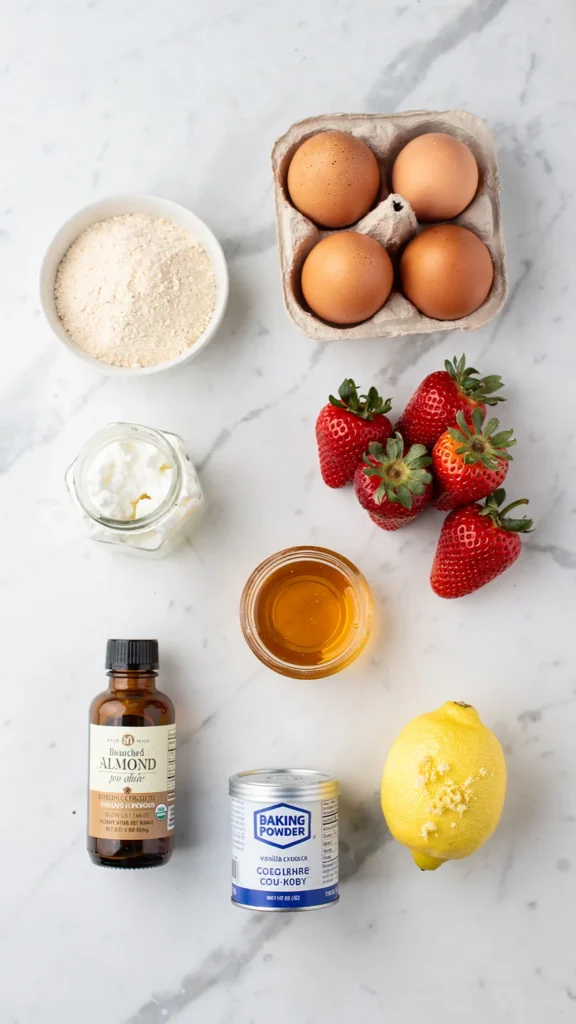
Essential Ingredients
- 2 cups blanched almond flour (not almond meal)
- 1 cup full-fat cottage cheese, drained slightly if very watery
- 3 large eggs, at room temperature
- 1/4 cup honey or pure maple syrup
- 1 teaspoon pure vanilla extract
- 1 teaspoon baking powder
- 1/4 teaspoon fine salt
- 1 cup fresh strawberries, diced small
- 1 tablespoon lemon zest (optional but highly recommended)
One thing I always tell people: the almond flour brand actually matters here. I use Bob’s Red Mill Super-Fine Almond Flour or Anthony’s Almond Flour, and both give a really consistent result. Stay away from almond meal. It’s coarser and makes the muffins grainy in a way that’s hard to enjoy. Blanched super-fine almond flour is the move, every time.
Alternative Ingredients
Not everyone has every ingredient ready to go, so here are swaps that actually work:
If you don’t have cottage cheese, full-fat ricotta is the closest substitute. Greek yogurt works too, though it adds a slight tang. For the sweetener, maple syrup and honey are interchangeable. If you’re keeping carbs really low, a liquid monk fruit sweetener works at the same ratio.
Frozen strawberries can replace fresh ones as long as you thaw them completely and pat them dry first. Excess moisture is the enemy of a good muffin batter. You can also swap in blueberries, raspberries, or diced peaches if strawberries aren’t in season.
If eggs are an issue, two flax eggs (two tablespoons ground flaxseed mixed with six tablespoons water, rested for five minutes) work as a substitute, though the texture will be slightly denser.
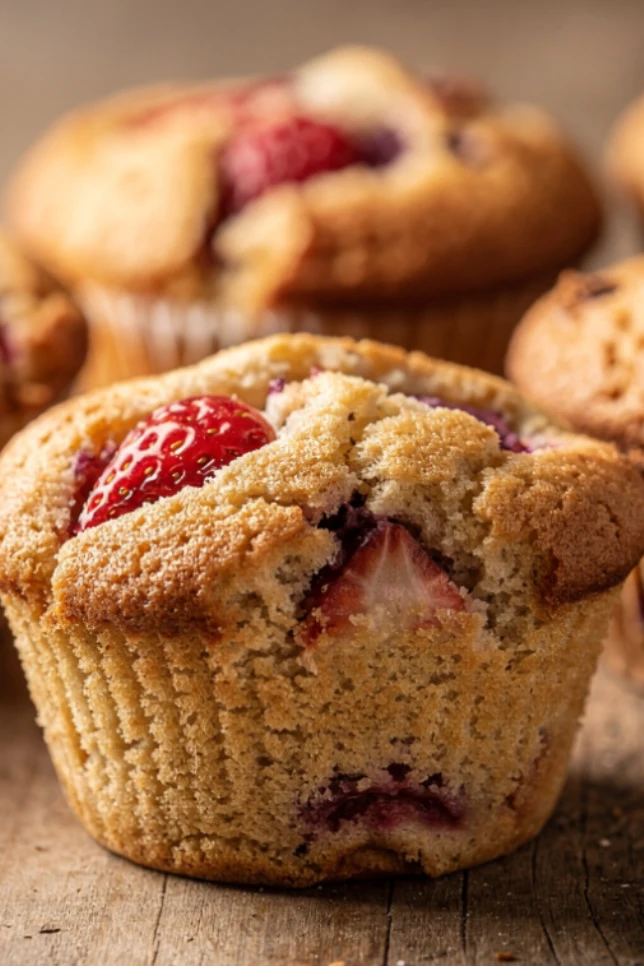
Step-by-Step Directions
Step 1: Preheat your oven to 350°F (175°C). Line a 12-cup non-stick muffin pan with paper liners or grease each cup generously with coconut oil. I’ve done both and the liners honestly make your life easier.
Step 2: Mix the wet ingredients. In a large mixing bowl, whisk together the cottage cheese, eggs, honey, and vanilla extract until combined. It doesn’t need to be perfectly smooth. A few small lumps from the cottage cheese are totally fine and will disappear during baking.
Step 3: Add the dry ingredients. Add the almond flour, baking powder, and salt to the bowl and stir until a thick batter forms. If you have a food processor, you can blitz the whole batter in there for a smoother, more consistent texture. I do this when I have time and it makes a noticeable difference.
Step 4: Fold in the strawberries and lemon zest. Add the diced strawberries and lemon zest and fold gently. Don’t overmix here. The strawberries will start to break down and bleed into the batter if you stir too aggressively, and you want those little pockets of fruit, not pink muffins.
Step 5: Fill the muffin cups. Divide the batter evenly between all 12 cups, filling each about three-quarters full. These muffins don’t rise dramatically, so you can be a little generous.
Step 6: Bake for 22 to 25 minutes, until the tops are golden and a toothpick inserted in the center comes out clean. Let them cool in the pan for 10 minutes before moving them to a wire rack.
Pro Tips
The biggest mistake I made early on was skipping the step of draining the cottage cheese. If yours looks particularly wet or watery, put it in a fine mesh strainer for about 10 minutes before using it. Wet batter leads to flat muffins with a gummy center, and I learned that the hard way after two failed batches.
Room temperature eggs make a real difference too. Cold eggs don’t blend into the batter as smoothly. I usually pull them out of the fridge about 20 minutes before I start.
For storage: these keep well in an airtight meal prep container in the fridge for up to five days. For longer storage, freeze them individually on a baking sheet, then transfer to a freezer bag. They reheat in the microwave in about 30 seconds and taste almost like they just came out of the oven.
One more thing. If you want a little crunch on top, sprinkle a few slivered almonds over each muffin before baking. It adds texture and makes them look really pretty if you’re bringing them somewhere.
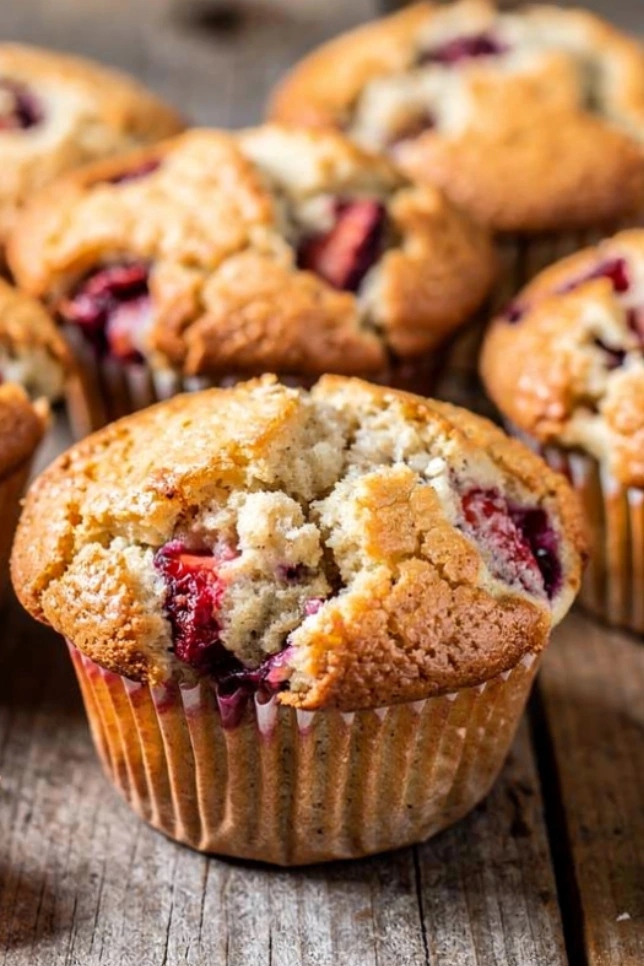
Recipe Info Table
| Detail | Info |
|---|---|
| Prep Time | 10 minutes |
| Cook Time | 22 to 25 minutes |
| Total Time | 35 minutes |
| Servings | 12 muffins |
| Yield | 1 standard 12-cup muffin tin |
Key Features
These cottage muffins are naturally gluten-free, grain-free, and higher in protein than most conventional breakfast muffins. They fit well into low-carb, diabetic-friendly, and weight loss meal prep routines. No stand mixer needed. No complicated techniques. Just a bowl and about 10 minutes of active work.
FAQs
Can I make these dairy-free? The cottage cheese is pretty central to the structure of this recipe, but a thick dairy-free yogurt or dairy-free ricotta can work as a substitute. The texture won’t be identical, but it’s a reasonable option.
Can I use frozen strawberries? Yes. Thaw them completely and pat dry with paper towels before adding to the batter. This step is not optional if you want muffins that set properly.
Why did my muffins come out gummy in the middle? Most likely the batter was too wet. Check the moisture level of your cottage cheese, make sure your strawberries were dried well, and confirm your oven temperature with a separate thermometer. Ovens run hotter or cooler than they say more often than you’d think.
Are these keto-friendly? They’re lower in carbs than traditional muffins and the almond flour base keeps the glycemic impact low. But the honey and strawberries do add some natural sugar, so strict keto followers may want to swap the honey for a sugar-free liquid sweetener and use fewer strawberries.
Nutrition Facts (per muffin, approximate)
| Nutrient | Amount |
|---|---|
| Calories | 178 |
| Total Fat | 13g |
| Saturated Fat | 2g |
| Protein | 8g |
| Total Carbohydrates | 10g |
| Dietary Fiber | 2g |
| Net Carbs | 8g |
| Sugar | 6g |
| Sodium | 130mg |
Values are estimates based on specific brands and ingredients used. Results may vary.
You’ll Also Love
- Almond Flour Blueberry Breakfast Muffins
- High-Protein Cottage Cheese Pancakes
- Gluten-Free Lemon Poppy Seed Muffins
- Low-Carb Banana Almond Flour Bread
Conclusion
These cottage muffins started as a way to use up ingredients before they went bad, and somehow turned into the recipe my family asks for more than almost anything else I make. That doesn’t happen very often, especially with recipes that are actually good for you.
If you’ve been skeptical about baking with almond flour or haven’t worked with cottage cheese in baked goods before, I hope this is the recipe that changes your mind. The combination is genuinely worth trying. Give them a bake this weekend, adjust the fruit to whatever looks good at your market, and let me know in the comments how they turned out.
Happy baking.