I’ve been making panettone every December for the last ten years. And for the first five of those years, I failed at least once every single season. Traditional panettone is genuinely humbling. It requires a living sourdough starter called lievito madre that takes weeks to cultivate, a stand mixer running for 45 minutes straight to build the gluten, and a two-day baking process that has brought grown adults to tears (including me, in my kitchen, December 2016, holding a collapsed loaf and questioning my life choices).
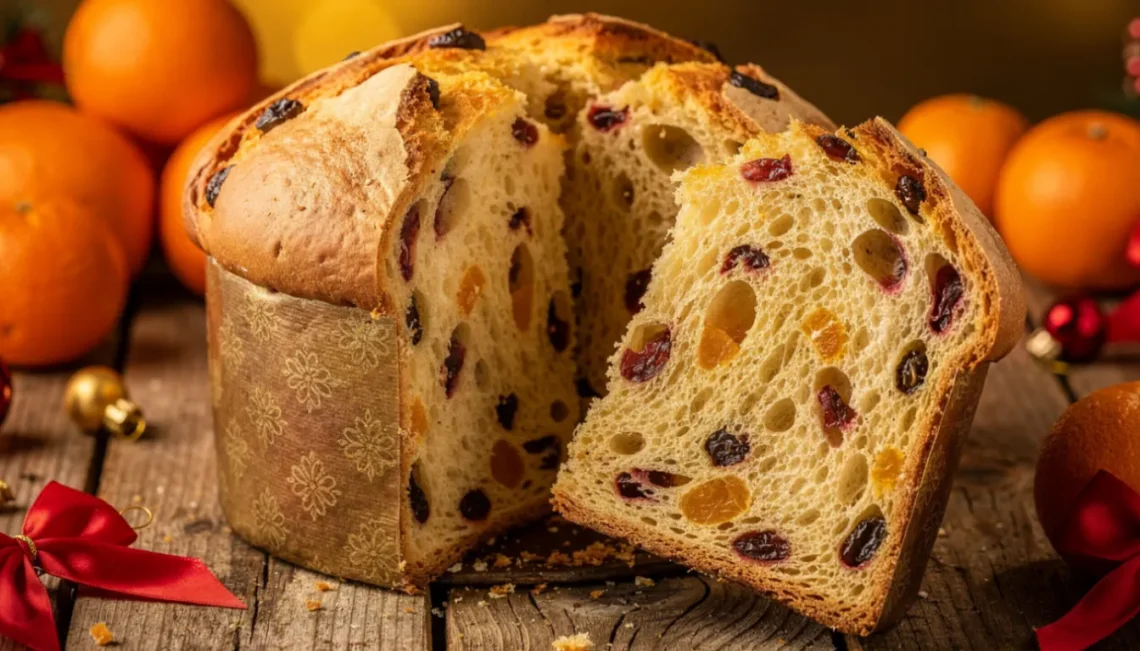
So when a reader named Claudia emailed me asking if panettone could be made in a blender, my first instinct was to say no. But I was curious enough to try. Three test batches later, I had something that genuinely surprised me. It is not the exact same thing as authentic Milanese panettone. It is softer, more cake-like, and finished in one afternoon instead of two days. But honestly? My family liked it better. My husband asked me to stop making the complicated version.
This is the recipe I am sharing today.
Why You’ll Love This Recipe
You do not need a bread maker, a KitchenAid stand mixer, or any professional equipment. The blender handles the heavy mixing work in under two minutes, and the rest is just patience during the rise. It is genuinely beginner-friendly, uses ingredients you probably already have, and produces a beautiful golden dome that looks impressive on any holiday table.
What Makes This Recipe Unique
Most blender bread recipes use the blender as a shortcut for the dough mixing but still require serious kneading afterward. This recipe is designed differently. The eggs and butter do the structural work that gluten would normally handle, creating a tender, rich crumb without any intense hand kneading. Think of it as panettone meets a very good brioche. The flavor profile, the citrus zest, the soaked fruit, all of it is there.
Key Features
- Ready in about 4 hours from start to finish
- No stand mixer or bread machine required
- Soft, buttery crumb with classic panettone flavor
- Freezes beautifully for up to 3 months
- Makes incredible French toast on day 3
Essential Ingredients
For the Dough:
- 3 cups bread flour (not all-purpose, this matters)
- 2 1/4 tsp active dry yeast
- 3/4 cup warm whole milk (around 110 degrees F)
- 3 large eggs, room temperature
- 1/2 cup unsalted butter, softened
- 1/3 cup granulated sugar
- 1 tsp salt
- 2 tsp pure vanilla extract
- Zest of 1 orange and 1 lemon
For the Fruit Mix:
- 1/2 cup golden raisins
- 1/2 cup dried cranberries
- 1/4 cup candied orange peel
- 2 tbsp dark rum or orange juice (for soaking)
Alternative Ingredients
No bread flour? You can use all-purpose flour, but add 1 tbsp of vital wheat gluten to compensate for the lower protein content. The texture will be slightly denser but still delicious.
Not a fan of dried cranberries? Swap them for dried cherries or chopped dried apricots. Both work beautifully here. Some readers have also used chocolate chips instead of candied peel, which gives you a totally different but excellent panettone variation.
Dairy-free? Replace the whole milk with full-fat oat milk and use vegan butter. The rise takes a bit longer but the flavor holds up well.
Tools That Make This Easier
A high-speed blender is the star here. I use my Vitamix and it handles this dough in about 90 seconds flat. A Ninja blender with a dough setting also works great. If you have a lower-powered blender, that is fine too, just blend in shorter bursts and stop to scrape down the sides more often.
You will also want proper tall paper panettone molds. These are inexpensive (usually a couple of dollars each) and make a real difference in how the bread rises. Do not try to use a regular non-stick pan or a standard cake tin. I made that mistake in 2018 and ended up with something that looked like a frisbee. Tasted fine, looked wrong.
An electric hand mixer with dough hook attachments is helpful for the brief hand-kneading stage after blending, but your hands work just as well if you do not mind a few minutes of work.
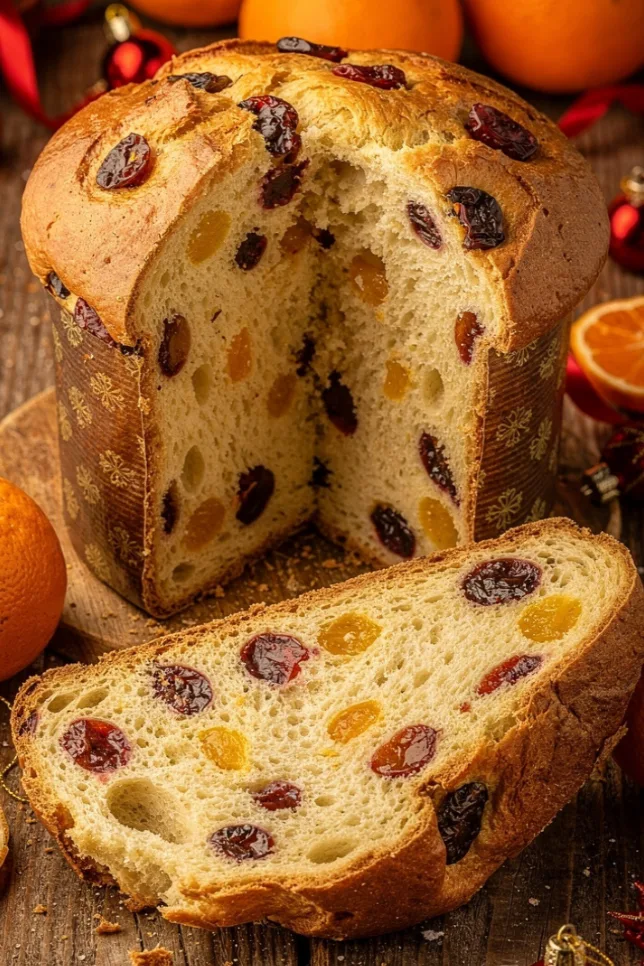
Recipe Info Table
| Detail | Info |
|---|---|
| Prep Time | 30 minutes |
| Rise Time | 3 hours (2 rises) |
| Cook Time | 38 minutes |
| Total Time | 4 hours 10 minutes |
| Servings | 8 to 10 |
| Yield | 1 large panettone (about 1.5 lbs) |
Step-by-Step Directions
Step 1: Soak your fruit. At least 30 minutes before you start, combine the raisins, dried cranberries, and candied peel in a small bowl with the rum or orange juice. Give it a stir and leave it alone. This step makes a real difference in the final flavor.
Step 2: Proof the yeast. Combine the warm milk, 1 tsp of sugar, and the active dry yeast in a small bowl. Stir gently and let it sit for 8 to 10 minutes. You want it to look foamy and active. If nothing happens after 10 minutes, your yeast has expired and you need fresh yeast before continuing.
Step 3: Blend the wet ingredients. Add the proofed yeast mixture, eggs, vanilla extract, orange and lemon zest, remaining sugar, and salt to your blender. Blend on medium speed for about 30 seconds. Add the softened butter and blend again until smooth.
Step 4: Add the flour. With the blender running on low, add your bread flour one cup at a time through the lid opening. Stop and scrape down the sides between each addition. The dough will look thick and slightly sticky when done. That is correct.
Step 5: Brief knead. Turn the dough onto a lightly floured surface and knead gently for about 4 minutes until it comes together into a smooth ball. Do not add too much extra flour here. A slightly tacky dough is what you want.
Step 6: Fold in the fruit. Flatten the dough into a rough rectangle, scatter your soaked fruit over the top, and fold the dough over itself several times until the fruit is evenly distributed throughout. Take your time here so you do not end up with all the raisins in one corner.
Step 7: First rise. Place the dough in a lightly oiled bowl, cover tightly with plastic wrap, and let it rise somewhere warm for 2 hours. I use my oven with just the oven light on. It creates a steady 78-degree environment that is perfect for yeast activity.
Step 8: Shape and second rise. Gently deflate the dough and shape it into a smooth ball. Place it in your panettone mold seam side down. Cover loosely and let it rise again for 60 to 90 minutes until it domes about an inch above the top of the mold.
Step 9: Bake. Preheat your oven to 350 degrees F. Brush the top of the dough gently with egg wash (one egg beaten with a tablespoon of milk). Score a shallow X in the top with a sharp knife. Bake for 35 to 38 minutes until deep golden brown. If the top is browning too fast, tent loosely with foil around the 25-minute mark. The internal temperature should reach 190 degrees F when done.
Step 10: Cool upside down. This is the step most people skip, and it is the most important one. Immediately after pulling the panettone from the oven, push two long metal skewers horizontally through the bottom of the mold and hang it upside down between two pots to cool completely. This takes about 2 hours. It prevents the bread from collapsing while the structure sets. Yes, it looks ridiculous. Do it anyway.
Pro Tips
Butter temperature matters a lot here. Cold butter will not incorporate smoothly in the blender and you will end up with uneven chunks in the dough. Pull it from the fridge at least two hours before you plan to start.
If your kitchen is cold (under 68 degrees F), your rise times will be longer. Do not rush the process by checking too early. The dough needs to truly double before you move to the next step.
For gifting, store the cooled panettone in an airtight food storage container or wrap it tightly in cellophane. It keeps at room temperature for 5 days and freezes perfectly for up to 3 months. Slice before freezing for easier individual portions.
FAQs
Can I make this without a blender? Yes. Use a large mixing bowl and an electric hand mixer on medium speed. It takes about 6 to 7 minutes instead of 90 seconds, but the result is the same.
My dough didn’t rise. What happened? Most likely the yeast was inactive. Always proof your yeast first as described in step 2. Also check that your milk wasn’t too hot. Anything above 115 degrees F kills yeast.
Can I use a food processor instead of a blender? You can, but use the pulse function and add flour gradually. Food processors can overheat the dough if run continuously for too long.
Why does panettone need to cool upside down? The soft, enriched crumb cannot support its own weight while still hot. Hanging it upside down lets it set without collapsing.
Nutrition Facts (per serving, based on 10 servings)
| Nutrient | Amount |
|---|---|
| Calories | 320 |
| Total Fat | 13g |
| Saturated Fat | 7g |
| Cholesterol | 85mg |
| Sodium | 195mg |
| Total Carbohydrates | 44g |
| Dietary Fiber | 2g |
| Total Sugars | 18g |
| Protein | 7g |
Nutrition is estimated and will vary based on specific ingredients used.
You’ll Also Love
- No-Knead Brioche Bread (Only 4 Ingredients)
- Easy Italian Ciambella Breakfast Cake
- Orange Cranberry Christmas Bread Loaf
- Blender Banana Bread with Browned Butter
- Homemade Colomba di Pasqua (Italian Easter Dove Cake)
Conclusion
Panettone has this reputation for being untouchable at home, reserved for professional bakers and Italian nonnas with decades of experience. And the traditional version really does deserve that respect. But this blender method proves that you can get something genuinely special without the days of work or the specialized equipment.
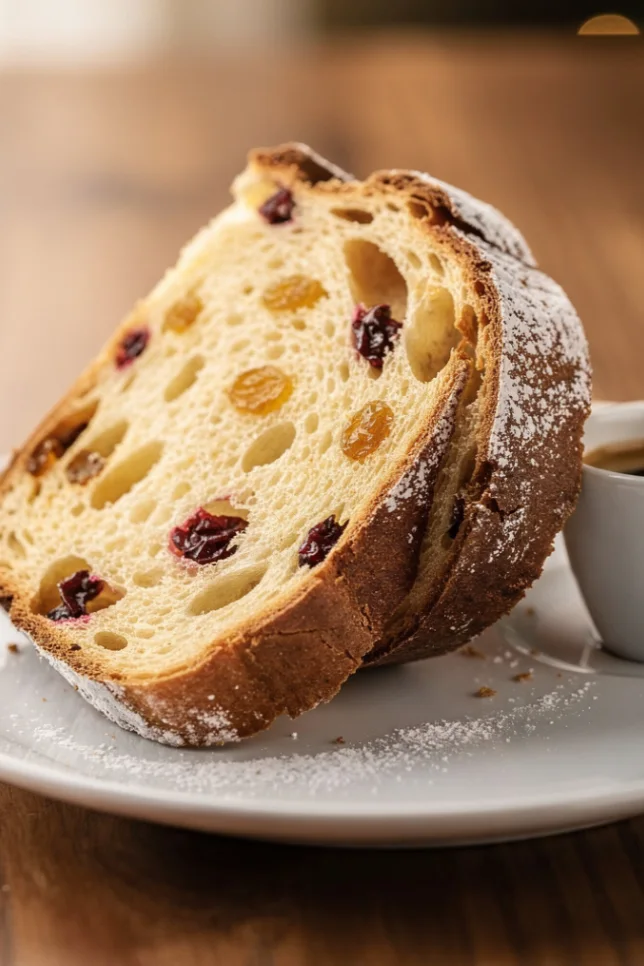
Make it this holiday season. Hang it upside down and let it cool properly. Slice it thick with your morning coffee. And if someone asks how long it took, you are welcome to be vague about it. Your secret is safe here.