Introduction
I’ll be honest with you. This cake was born out of desperation on a rainy Wednesday morning. I had a nearly full tub of Greek yogurt sitting in the back of my fridge, four oranges on the counter that were one day away from being too ripe to enjoy, and a serious craving for something homemade. I wasn’t in the mood for anything complicated. No creaming butter for ten minutes, no multiple bowls, no stress.
So I just started mixing things together and hoped for the best.
Ten years of baking will do that to you. It gives you enough instinct to improvise without a complete disaster. And this particular improvisation turned into the most requested cake in my kitchen. Guests always think I spent hours on it. I let them believe that.
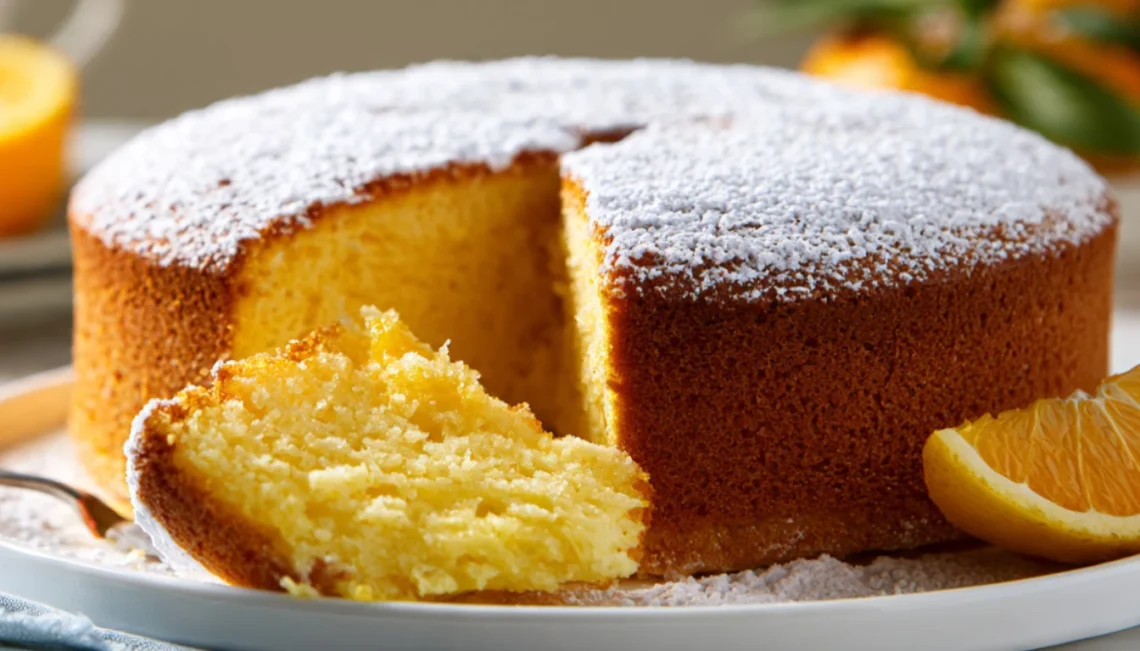
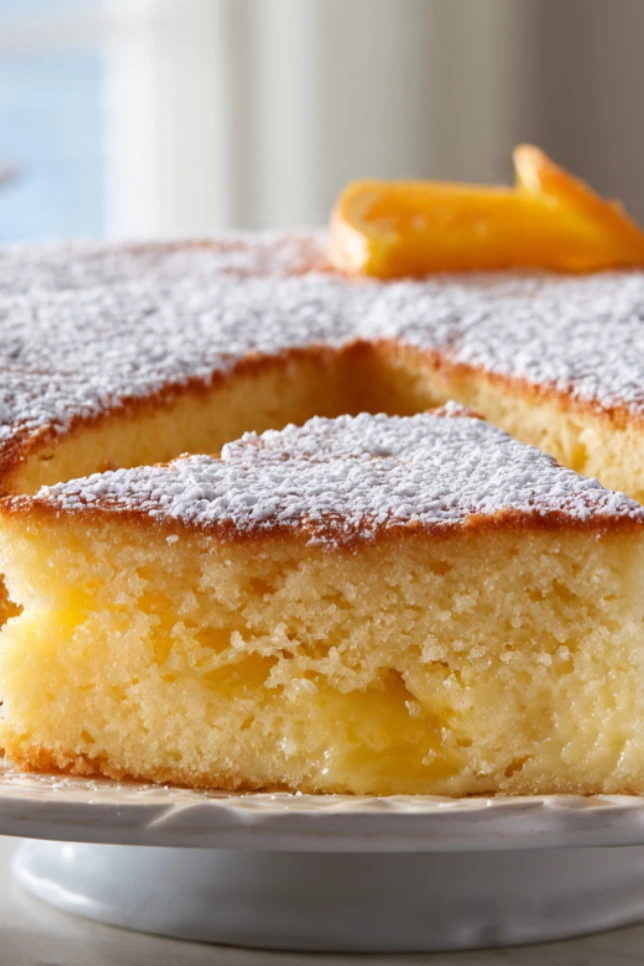
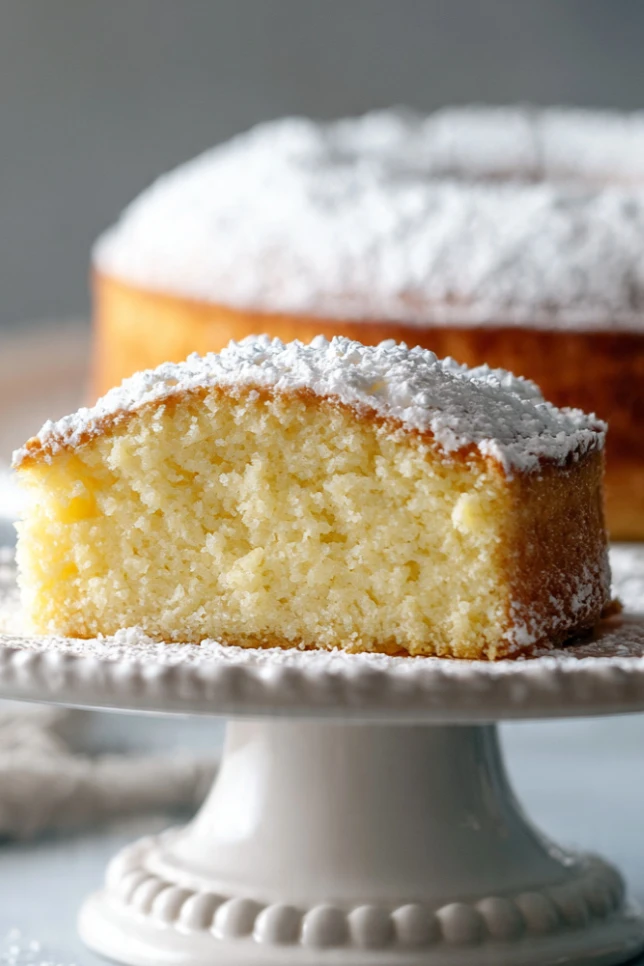
What makes this cake genuinely different from every other yogurt cake out there is the texture. The outside bakes up golden and slightly crisp at the edges. The inside stays incredibly fluffy and light. And right in the center, you get this soft, almost custardy layer that really does feel like pudding when you slice into it. That’s not an accident. It’s the cornstarch and orange juice working together during baking, and it’s the one thing that makes people ask “what is IN this?”
The orange flavor here is real and bright, not perfume-y or fake. You’re getting it from fresh zest and juice, which means you’re tasting the actual fruit. I always reach for organic oranges when I’m zesting because you’re scraping that skin right into your batter, and it makes sense to use the cleanest version you can find.
Why You’ll Love This Recipe
This cake is honestly one of the most forgiving things I’ve ever baked. The batter takes about 15 minutes to pull together, it bakes in under 45 minutes, and you don’t need any fancy equipment. You can make it the night before a gathering and it will be even better the next morning once the moisture has settled through every layer. It’s lighter than a classic butter cake, which makes it a smarter dessert option if you’re trying to eat well without giving up something that feels like a treat. No frosting required. A dusting of powdered sugar and you’re done.
What Makes This Recipe Unique
Most yogurt cakes are just moist cakes with yogurt swapped in for some of the fat. This one does something more interesting. The combination of full-fat Greek yogurt, fresh orange juice, and cornstarch creates a self-layering effect as it bakes. The outer crumb sets first and stays fluffy and airy, while the center stays softer and almost creamy. You’re getting two textures in one cake with zero extra effort. It’s the kind of thing that looks like a simple recipe but behaves like something much more carefully engineered.
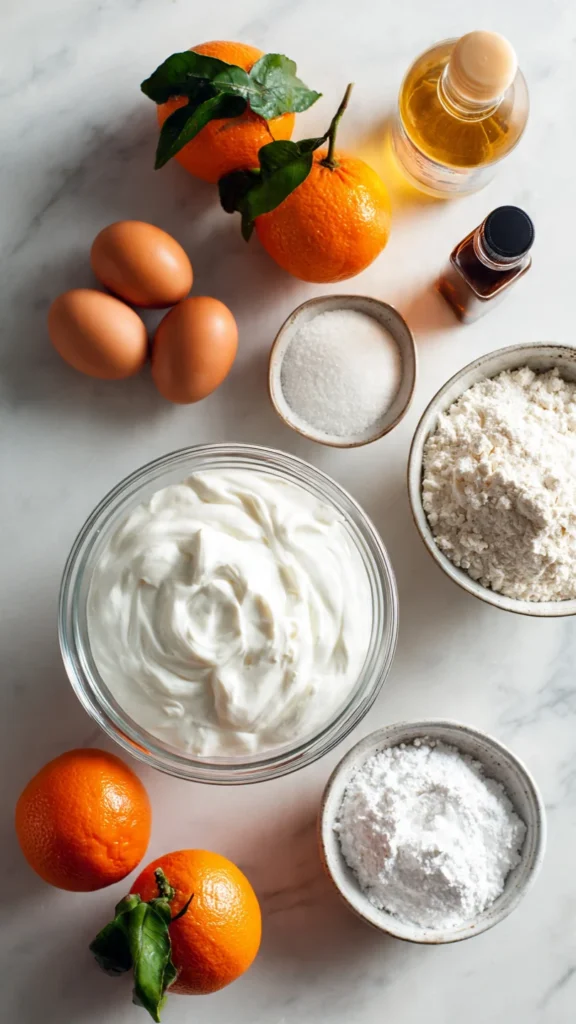
Essential Ingredients
- 1 cup full-fat plain Greek yogurt (Chobani or Fage both work beautifully here, and the fat content really matters for texture)
- 3 large eggs at room temperature
- 1 cup granulated sugar
- 1/2 cup neutral vegetable oil (sunflower oil or light olive oil, not extra virgin)
- Zest of 2 medium organic oranges
- 1/4 cup fresh orange juice (squeezed right before you use it)
- 1 teaspoon pure vanilla extract
- 1 and 1/2 cups all-purpose flour
- 2 tablespoons cornstarch
- 2 teaspoons baking powder
- 1/4 teaspoon fine sea salt
- Powdered sugar for dusting
One thing I need to say about the yogurt. Use the thick, strained full-fat kind. The watery low-fat versions have too much liquid and will throw off the batter consistency. I made that mistake years ago and ended up with a cake that spread flat and never really set properly. Learned that lesson once and never again.
Alternative Ingredients
If you want to switch things up, this recipe is pretty flexible. Swap the orange for two lemons (zest and juice) and you get a gorgeous lemon version that’s equally good. Blood oranges work beautifully in winter when they’re in season and give the cake a natural pink blush. For a dairy-free version, a thick coconut yogurt substitutes well, though the flavor shifts slightly tropical. You can cut the sugar down to 3/4 cup if you prefer less sweetness, and a one-to-one gluten-free flour blend works fine if you need it.
Recipe Info Table
| Detail | Info |
|---|---|
| Prep Time | 15 minutes |
| Cook Time | 40 to 45 minutes |
| Total Time | 55 to 60 minutes |
| Servings | 8 to 10 slices |
| Yield | One 9-inch round cake |
Step-by-Step Directions
Step 1: Prep your pan and oven. Preheat to 350°F (175°C). Grease a 9-inch round non-stick cake pan and line the bottom with a circle of parchment paper. Do not skip the parchment. I skipped it once. It was not a good day.
Step 2: Prep your oranges. Zest both oranges first, then juice them. Set everything aside. You want about 1/4 cup of juice total.
Step 3: Mix the wet ingredients. In a large mixing bowl, whisk the eggs and sugar together until the mixture turns pale and slightly thickened. This takes about 2 minutes by hand or about 60 seconds with a hand mixer. If you have a KitchenAid stand mixer, use the whisk attachment on medium for one minute. Add the Greek yogurt, oil, orange zest, orange juice, and vanilla extract. Whisk until smooth.
Step 4: Add the dry ingredients. In a separate bowl, sift together the flour, cornstarch, baking powder, and salt. Pour the dry mixture into the wet mixture and fold gently with a rubber spatula. Stop as soon as you no longer see streaks of flour. This is important. Overmixing activates the gluten and makes your cake dense and rubbery instead of fluffy.
Step 5: Bake. Pour the batter into your prepared non-stick pan and smooth the top with your spatula. Tap the pan gently on the counter once or twice to release air bubbles. Bake for 40 to 45 minutes until the top is deep golden brown and a toothpick inserted near the center comes out with just a few moist crumbs clinging to it. The very center should feel set but still have the slightest give when you press it gently. That softness is what you want.
Step 6: Cool completely. Let the cake rest in the pan for 10 minutes before running a knife around the edges and turning it out onto a wire cooling rack. Wait until it’s fully cooled before dusting with powdered sugar. Cutting into it warm is tempting but the pudding layer needs time to fully set.
Pro Tips
Room temperature eggs mix into the batter more evenly than cold ones. Take them out 30 minutes before you start.
Don’t skip the cornstarch. I’ve tested this recipe without it and you just get a regular yogurt cake, which is fine but not the same thing at all. The cornstarch is what creates that custardy center.
If the top is browning too fast before the center is done, loosely tent the pan with a sheet of aluminum foil for the last 10 minutes of baking.
A kitchen scale gives you much more consistent baking results than measuring cups, especially with flour. If you bake even a few times a month, it’s one of the most useful tools you can add to your kitchen.
For storage, wrap the cooled cake tightly or keep it in an airtight food storage container at room temperature for up to 3 days. In the fridge it stays fresh for 5 days. Honestly, the flavor deepens overnight and it’s genuinely better on day two. You can also freeze individual slices wrapped in plastic wrap and stored in a freezer-safe container for up to 2 months.
Key Features
- One-bowl batter with minimal cleanup
- No stand mixer required (though it helps)
- Ready in under one hour
- Stays moist and fresh for 3 to 5 days
- No frosting or glaze needed
- Naturally lighter than traditional butter cakes
- Easily adapted for dairy-free or gluten-free diets
Nutrition Facts Table
Per serving based on 10 servings. Values are estimates.
| Nutrient | Per Serving |
|---|---|
| Calories | 248 |
| Total Fat | 11g |
| Saturated Fat | 2g |
| Cholesterol | 57mg |
| Sodium | 112mg |
| Total Carbohydrates | 33g |
| Dietary Fiber | 0.5g |
| Total Sugars | 20g |
| Protein | 5g |
FAQs
Can I use low-fat Greek yogurt instead of full-fat? You can, but the texture will be noticeably less tender and the pudding center won’t be as pronounced. If full-fat is what’s available, use it. Your mileage may vary with anything reduced-fat in baking.
Why is my cake dense instead of fluffy? Almost certainly overmixing after the flour went in. Once you add dry ingredients to wet, fold gently and stop early. A few streaks are fine. They’ll disappear as the batter comes together.
Can I make this in an air fryer? I haven’t tested it myself, but a smaller 7-inch pan at 320°F in a basket-style air fryer could work. You’d need to reduce baking time and check early. If you try it, start checking at 25 minutes.
Can I freeze this cake? Yes. Freeze individual slices in a freezer-safe airtight container for up to 2 months. Thaw at room temperature for a couple of hours before serving.
Can I add mix-ins to the batter? Absolutely. A handful of fresh blueberries or dark chocolate chips folded in at the end works well. Poppy seeds with lemon zest is another great variation.
You’ll Also Love
If this cake clicked for you, these recipes are worth trying next:
- Lemon Ricotta Pound Cake – tender, dense, and incredibly satisfying
- Greek Yogurt Blueberry Muffins – same principle, perfect for meal prep breakfasts
- Orange Olive Oil Cake – a little more rustic and even easier
- Honey Almond Cake with Yogurt Glaze – great for special occasions
Conclusion
After ten years of baking, the recipes I come back to most aren’t the complicated ones. They’re the ones that work reliably, taste better than they have any right to considering the effort involved, and make people ask you for the recipe. This fluffy yogurt and orange pudding cake is exactly that.
If you make it, I’d love to know how it went. Drop a comment below or tag me in your photos. There’s something really satisfying about watching a simple recipe make someone’s day, and this one has done that more times than I can count.
Happy baking.