You know what’s funny? I spent years perfecting complicated recipes with fancy ingredients and elaborate techniques, only to realize that the dish I make most often is a simple green salad. And I’m not talking about those sad desk salads you grab from the fridge section at lunch. I’m talking about a properly made, thoughtfully constructed green salad that actually tastes incredible.
Here’s the thing. Most people treat salad like an afterthought, something you throw together when you’re trying to be “healthy” or need a side dish for dinner. But once I learned how to build a proper green salad with the right technique and fresh ingredients, it became my go-to meal when I’m too tired to cook, need something quick for meal prep, or just want something that makes me feel good.
I’ll be honest, my salad journey started pretty rough. I used to buy those pre-bagged salad mixes (you know the ones), dump them in a bowl, drown them in bottled dressing, and wonder why I never looked forward to eating salad. The breakthrough came when my friend who runs a farm-to-table restaurant showed me her approach. She pulled out her salad spinner, which honestly looked more impressive than my food processor, and walked me through her technique. That single afternoon changed everything.
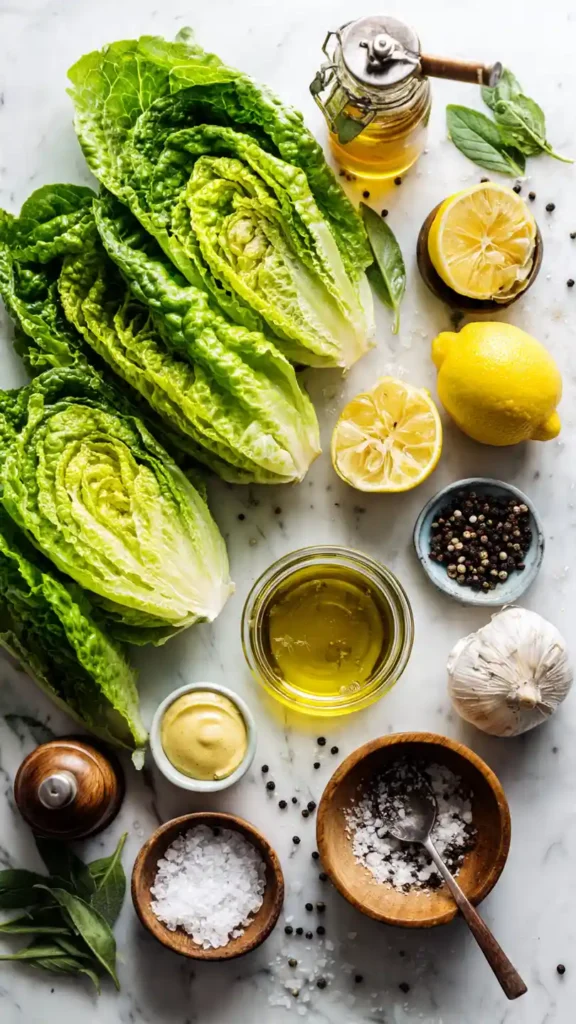
Essential Ingredients
- Mixed salad greens (6 cups, about 5-6 ounces): I use a combination of butter lettuce, romaine hearts, and arugula
- Extra virgin olive oil (3 tablespoons): Get the good stuff, it matters here
- Fresh lemon juice (1 tablespoon): From half a lemon, not the bottled kind
- Dijon mustard (1/2 teaspoon): For emulsification and tang
- Honey (1/2 teaspoon): Balances the acidity perfectly
- Garlic (1 small clove, minced): Optional but recommended
- Sea salt (1/4 teaspoon): I use flaky sea salt when I have it
- Black pepper (freshly ground, to taste)
- Shaved Parmesan (2 tablespoons, optional): Adds a nice salty punch
Alternative Ingredients
Look, I get it. Not everyone has access to a fancy grocery store or wants to spend a fortune on salad ingredients. Here are some swaps that actually work.
Can’t find butter lettuce? Regular green leaf lettuce works great. The texture is slightly different but still delicious. Romaine on its own makes a perfectly acceptable salad too. I’ve even made this with baby spinach when that’s all I had, and while it changes the flavor profile a bit, it’s still tasty.
For the dressing, if you don’t have Dijon mustard, regular yellow mustard works in a pinch. You might need to adjust the amount because it’s tangier. No honey? A tiny pinch of sugar does the trick. And if you’re storing salad in meal prep containers for the week, you can skip the Parmesan initially and add it fresh each day so it doesn’t get soggy.
The lemon juice is really the only non-negotiable for me. Bottled lemon juice tastes flat and doesn’t give you that bright, fresh flavor that makes this salad sing. But here’s a pro tip I learned: buy a few lemons at once and juice them all using a citrus juicer (mine was like $8 and it’s one of my most-used tools). Store the juice in a mason jar in the fridge, and it stays good for about a week.
Step-by-Step Directions
Step 1: Wash and Dry Your Greens Properly
This is where most people mess up, and honestly, I did too for years. Wet greens equal sad, limp salad because the water prevents the dressing from coating the leaves.
Fill a large bowl or your sink with cold water. Separate your lettuce leaves and submerge them completely. Swirl them around gently. You’d be surprised how much dirt and grit can hide in there. Lift the greens out (don’t pour them out with the water, or you’ll just put the dirt back on), and place them in your salad spinner.
Now here’s where that salad spinner earns its keep. Spin those greens until they’re completely dry. I usually do three or four good spins, dumping out the water in between. If you don’t have a salad spinner, you can pat them dry with paper towels or a clean kitchen towel, but trust me, investing in a decent salad spinner changed my salad game. Mine is just a basic OXO model, nothing fancy, but it works perfectly.
Step 2: Make the Dressing in the Bottom of Your Bowl
I learned this trick from a French cookbook and I’ll never go back to mixing dressing separately. It saves time and somehow makes the emulsion work better.
In your large salad bowl (and it should be large, bigger than you think you need), add the minced garlic, salt, and pepper. Use the back of a fork to mash the garlic with the salt. This creates a paste and takes away some of the harsh raw garlic bite.
Add the Dijon mustard and honey. Squeeze in your lemon juice. Now here’s the key: whisk it together with a fork for about 10 seconds. Then slowly drizzle in the olive oil while whisking constantly. You want to see it start to thicken slightly and turn creamy. That’s emulsification, and it means your dressing will coat the greens instead of pooling at the bottom of the bowl.
Step 3: Add Greens and Toss Properly
Pile your dry greens on top of the dressing. Don’t toss them yet. This is important because if you’re not serving immediately, you can keep them separate until you’re ready.
When you’re ready to serve, use your hands (I know, but hear me out) or salad tongs to toss the greens. I prefer hands because you can feel when everything is evenly coated without overdressing. Lift the greens from the bottom, turning them over and over until every leaf has a light coating of dressing. This should take about 30 seconds of active tossing.
The salad should look glossy but not wet. If you can see dressing pooling at the bottom, you’ve used too much or haven’t tossed enough.
Step 4: Add Final Touches
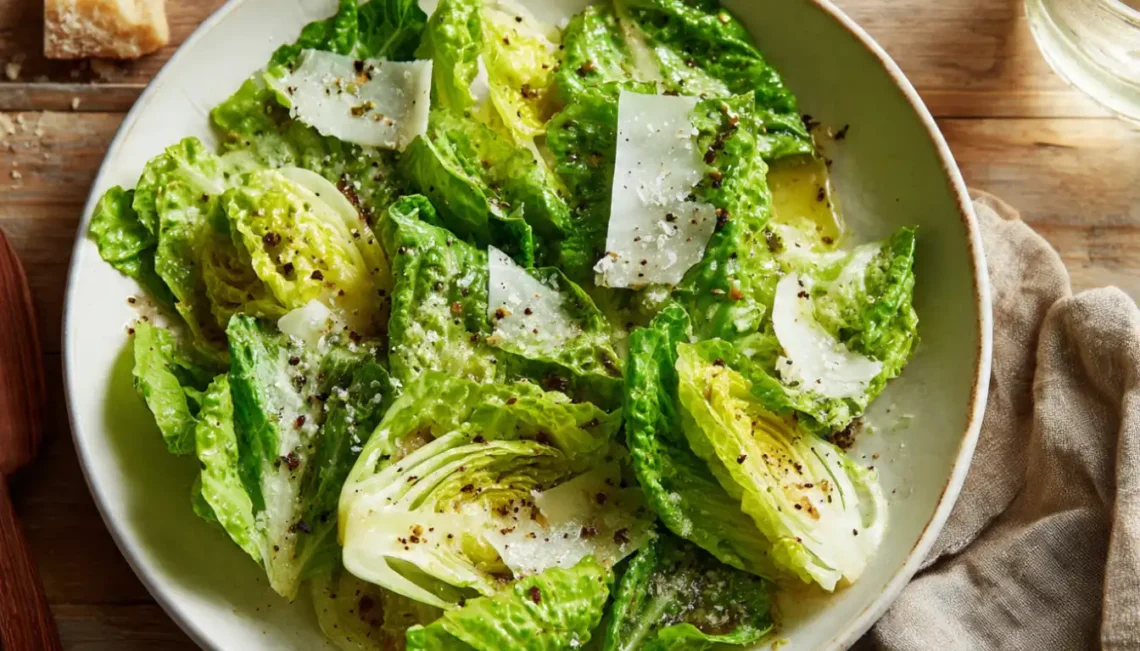
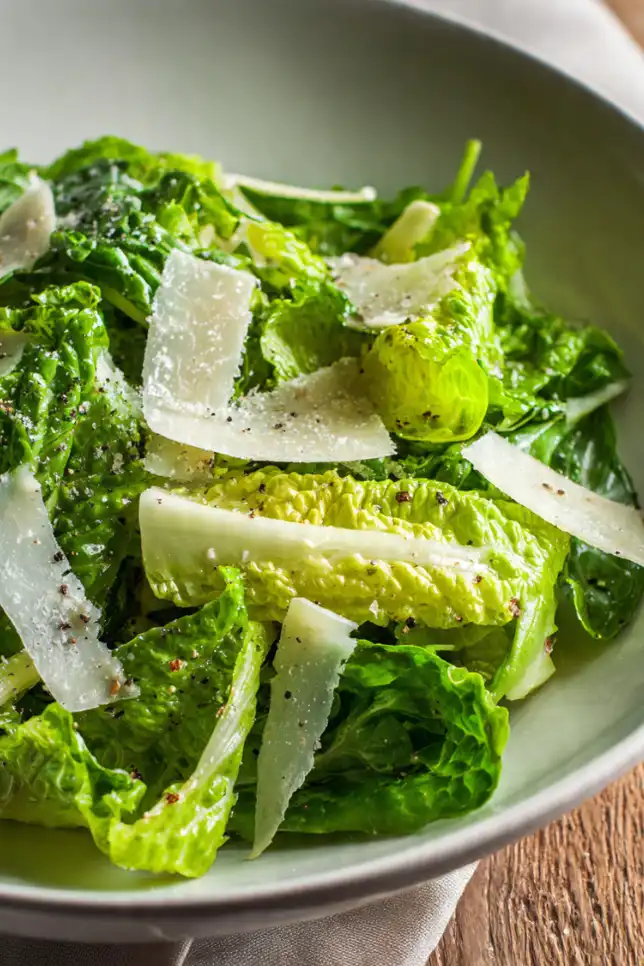
Pile the dressed greens onto individual plates or one large serving platter. If you’re using Parmesan, use a vegetable peeler to shave thin ribbons directly over the salad. The thin shavings melt slightly into the greens and taste way better than grated cheese.
Give it one final crack of black pepper and a tiny sprinkle of flaky salt if you have it. Serve immediately.
Pro Tips
The Temperature Thing Nobody Talks About
Room temperature makes a huge difference. I keep my olive oil on the counter (in a dark bottle away from heat) and pull my greens out of the fridge about 10 minutes before I’m ready to make the salad. Cold greens with room temperature dressing taste better and wilt less quickly than fridge-cold greens with warm hands tossing them.
The Garlic Situation
Raw garlic can be intense. If you’re sensitive to it or making this for someone who might be, cut the clove in half, rub it around the bowl, then discard it. You’ll get a subtle garlic flavor without the punch.
Make It a Meal
This salad scales up beautifully for meal planning. I often double or triple the recipe on Sunday, keep the greens and dressing separate in airtight containers, and I’ve got quick lunches all week. Just combine in a large bowl when you’re ready to eat. If you’re taking it to work, bring a small jar of dressing separately and toss right before eating.
To turn this into a complete meal, I add grilled chicken, hard-boiled eggs, chickpeas, or some leftover salmon. The base salad is so good that it works with almost any protein.
The Tools That Actually Help
Besides the salad spinner I already mentioned, I use a really good chef’s knife for prepping any add-ins. A sharp knife makes a massive difference when you’re cutting vegetables or proteins for your salad. I also keep my dressing ingredients in squeeze bottles on my counter. Sounds extra, but it makes throwing together a quick salad so much faster on busy weeknights.
FAQs
How do I keep my green salad fresh longer?
Store greens with paper towels in an airtight container and keep dressing separate.
Can I make green salad ahead of time?
Yes, but only toss with dressing right before serving.
What is the best dressing for a simple green salad?
A lemon vinaigrette gives the best balance of freshness and flavor.
Can I turn this salad into a full meal?
Add proteins like chicken, eggs, or beans for a complete dish.
Why You’ll Love This Recipe
This isn’t just another salad recipe you’ll scroll past and forget. It’s the kind of recipe that becomes part of your rotation because it’s genuinely useful and delicious.
First, it’s fast. Once you have your ingredients prepped and your salad spinner ready, you can have this on the table in under 15 minutes. On those nights when you get home late and can’t face turning on the stove, this saves you from ordering takeout.
Second, it actually tastes good. The homemade dressing is so much better than bottled that you’ll wonder why you ever bought the stuff. It’s bright, it’s balanced, and it makes the greens taste like something you want to eat, not something you’re forcing yourself to eat because you “should.”
Third, it’s flexible. This base recipe works as a side for practically any main dish. It pairs with grilled meats, roasted chicken, pasta dishes, pizza, you name it. But it’s also sturdy enough to be the main event if you bulk it up with some protein and maybe some chickpeas or white beans.
And honestly, it makes you feel good. Not in that punishing “I’m being good today” way, but in a genuine “I’m taking care of myself” way. When I’m stressed or overwhelmed, making this salad is almost meditative. The rhythm of washing greens, whisking dressing, tossing it all together, it’s calming.
What Makes This Recipe Unique
Look, I know you can find a million green salad recipes online. What makes this one different?
It’s the technique-driven approach combined with realistic ingredient requirements. I’m not telling you to seek out seven types of rare lettuce from the farmers market. I’m not insisting you make your own red wine vinegar from scratch. I’m giving you a solid, restaurant-quality method that works with grocery store ingredients.
The key difference is the dressing technique. Building it in the bowl and properly emulsifying it creates a coating that clings to the greens instead of sliding off or pooling at the bottom. That textural difference is what makes people say “wow, this salad is actually good” instead of “this is fine I guess.”
Also, the ratio. I tested this probably fifty times (not exaggerating, my family was so tired of salad) to get the greens-to-dressing ratio exactly right. Too many recipes overdress their salads or give you measurements that leave you with a puddle of dressing under barely coated lettuce. These proportions are dialed in.
Key Features
Quick prep: 15 minutes from start to finish, and most of that is washing and drying greens.
Minimal ingredients: You probably have most of this in your kitchen already. If not, everything keeps well so you can make this repeatedly.
Customizable base: This is your foundation. Add whatever protein, grain, or extra vegetables you want. I’ve topped this with everything from leftover rotisserie chicken to roasted sweet potatoes to canned tuna.
Make-ahead friendly: Prep the components on Sunday, store them separately, and you’ve got easy salads all week. Perfect for meal prep containers.
Crowd-pleasing: I’ve served this at dinner parties and casual weeknight meals. Everyone from picky kids to food snob friends has enjoyed it. The balanced dressing is the key.
Actually filling: When I bulk this up with protein, it keeps me satisfied for hours. It’s not one of those salads where you’re hungry again in 30 minutes.
You’ll Also Love
If this salad is hitting the spot for you, try these other recipes from my collection:
Caesar Salad with Homemade Croutons – Another classic salad that’s miles better homemade than from a restaurant.
Mediterranean Chickpea Salad – When you want something heartier with more protein, this one’s perfect for meal prep.
Asian-Inspired Cabbage Slaw – Totally different flavor profile but equally simple and delicious. Great alongside grilled foods.
Conclusion
So here’s what I want you to take away from this. Making a truly great green salad isn’t about having expensive ingredients or fancy equipment (okay, the salad spinner helps, but you can work around it). It’s about technique and paying attention to the details that actually matter.
Start with the freshest greens you can find. Dry them properly. Make a balanced dressing with good olive oil. Toss everything together just before serving. That’s it. That’s the whole secret.
I know it sounds almost too simple to be worth writing about. But I’m telling you, once you nail this basic formula, you’ll find yourself making salad constantly. It stops being something you should eat and becomes something you genuinely want to eat.
Try it once my way. Give it an honest shot with proper technique. I think you’ll be surprised at how much better a simple green salad can be when you treat it with a little bit of care and respect.
And if you make this, I’d love to hear how it turns out for you. Did you add anything extra? Did you change up the greens? Let me know what worked for you.
Simple Green Salad
Fresh lettuce with homemade olive oil lemon dressing and shaved Parmesan
Ingredients
Salad Greens
- 6 cups mixed salad greens (butter lettuce, romaine, arugula)
Homemade Dressing
- 3 tbsp extra virgin olive oil
- 1 tbsp fresh lemon juice (from half a lemon)
- 1/2 tsp Dijon mustard
- 1/2 tsp honey
- 1 small garlic clove, minced
- 1/4 tsp sea salt
- Black pepper, freshly ground to taste
Topping (Optional)
- 2 tbsp shaved Parmesan cheese
Instructions
- Wash and dry greens Fill a large bowl with cold water. Separate lettuce leaves and submerge completely. Swirl gently. Lift greens out and place in salad spinner. Spin until completely dry, about 3-4 spins, dumping water between spins.
- Make dressing base In a large salad bowl, add minced garlic, salt, and pepper. Use the back of a fork to mash garlic with salt, creating a paste. This reduces the harsh raw garlic bite.
- Emulsify dressing Add Dijon mustard, honey, and lemon juice to the bowl. Whisk with a fork for 10 seconds. Slowly drizzle in olive oil while whisking constantly until dressing thickens and becomes creamy.
- Add greens Pile dry greens on top of the dressing in the bowl. Do not toss yet if not serving immediately. This keeps greens crisp.
- Toss salad When ready to serve, use your hands or salad tongs to toss greens. Lift from the bottom, turning over repeatedly for about 30 seconds until every leaf has a light coating of dressing. Greens should look glossy but not wet.
- Plate and garnish Transfer dressed greens to individual plates or a large serving platter. Use a vegetable peeler to shave thin ribbons of Parmesan directly over the salad. Add final crack of black pepper. Serve immediately.
Pro Tips
Storage: Keep washed, dried greens in an airtight container lined with paper towels for 3-4 days. Store dressing separately. Make it a meal: Add grilled chicken, hard-boiled eggs, chickpeas, or leftover salmon. Temperature matters: Room temperature dressing tastes better and coats greens more evenly than cold dressing. Dressing keeps: Store extra dressing in the fridge for up to 5 days in a mason jar. Shake well before using.