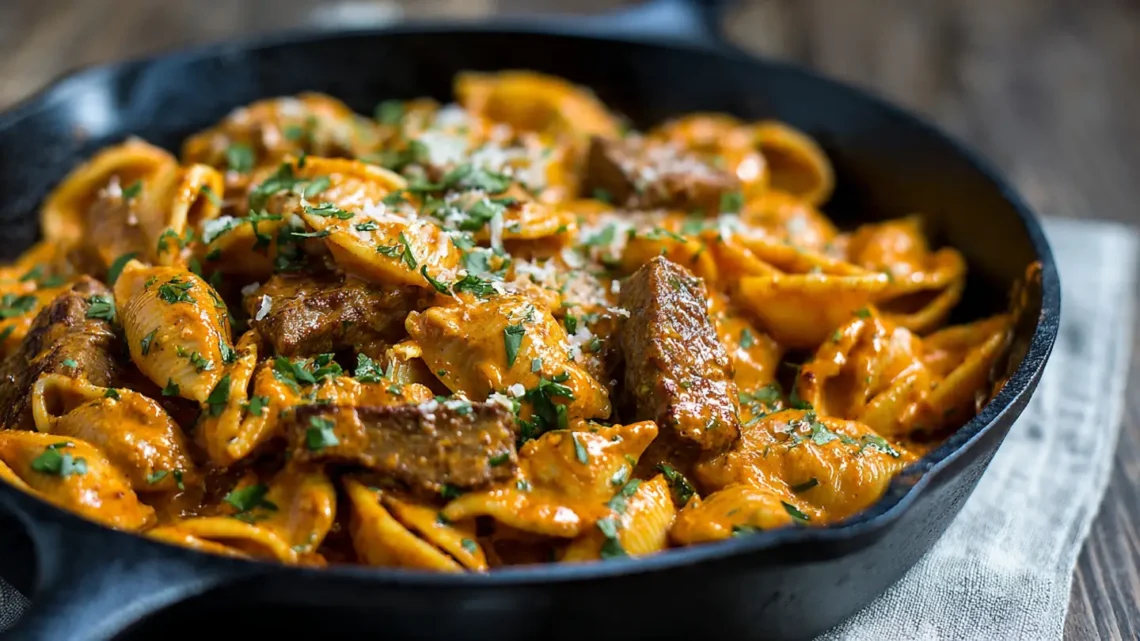
You know what? I used to think creamy pasta dishes were reserved for weekends or special occasions. Too fussy, too much cleanup, too many pans. Then one Tuesday evening when my fridge was looking pretty bare (just some steak I’d forgotten to cook and a box of shells), I threw together this paprika-spiced beauty and honestly, I’ve been making it at least twice a month ever since.
The secret here isn’t fancy technique or expensive ingredients. It’s about building layers of flavor in one pan and letting smoked paprika do the heavy lifting. That slightly sweet, smoky depth transforms basic cream sauce into something that tastes like you’ve been simmering it for hours. I learned this trick from a Hungarian friend back in culinary school, and it’s stuck with me through a decade of recipe testing.
Here’s the thing, though. This isn’t your typical “throw everything in a pot” situation. The order matters. When I first attempted this recipe, I made the rookie mistake of adding the cream too early, and it broke into a grainy mess. Live and learn, right? Now I know better, and I’m about to save you from that same disaster.
Essential Ingredients
- 1 lb sirloin steak, cut into bite-sized pieces
- 12 oz medium pasta shells
- 2 tablespoons olive oil
- 3 cloves garlic, minced
- 2 tablespoons smoked paprika
- 1 teaspoon regular paprika
- 1 cup beef broth
- 1½ cups heavy cream
- ½ cup sour cream
- 1 medium onion, finely diced
- 2 tablespoons tomato paste
- 1 teaspoon Worcestershire sauce
- Salt and black pepper to taste
- Fresh parsley for garnish
- ½ cup grated Parmesan cheese
Alternative Ingredients
Look, I get it. Sometimes you need to work with what you’ve got. If sirloin isn’t in the budget (and honestly, it often isn’t in mine), flank steak or even good quality stew meat works perfectly. Just cut it smaller so it cooks through faster.
No smoked paprika? You can use all regular paprika plus a tiny pinch of cumin for that smoky note. It won’t be quite the same, but it’ll still be delicious. I’ve also swapped the heavy cream for half-and-half when I’m trying to lighten things up, though you’ll want to add a tablespoon of flour to keep the sauce from being too thin.
For dairy-free friends, I’ve successfully made this with coconut cream and nutritional yeast instead of Parmesan. The flavor profile shifts more toward Thai than Hungarian, but it’s genuinely tasty in its own way.
Step-by-Step Directions
Step 1: Get your pasta going Bring a large pot of salted water to a boil and cook the shells according to package directions, but pull them out 2 minutes early. They’ll finish cooking in the sauce, and this prevents them from getting mushy. Drain and set aside. (Pro tip: save a cup of that pasta water. You might need it later to loosen the sauce.)
Step 2: Sear the steak Pat your steak pieces completely dry with paper towels. This is crucial for getting a good sear. Heat the olive oil in your largest skillet (or my personal favorite, a cast iron skillet if you have one) over high heat. When it’s smoking hot, add the steak in a single layer. Don’t crowd the pan, or you’ll steam instead of sear. Cook for 2-3 minutes per side until nicely browned. Remove to a plate and don’t worry if they’re not cooked through yet.
Step 3: Build the flavor base Lower the heat to medium and add the diced onion to the same pan. Let all those beautiful brown bits from the steak work their magic. Cook for 5 minutes until the onion softens and turns translucent. Toss in the garlic and cook for another 30 seconds until fragrant. Now add both paprikas and stir constantly for about 45 seconds. This step is where the magic happens, so don’t skip it or rush it.
Step 4: Create the sauce Stir in the tomato paste and let it cook for a minute. It’ll darken slightly and smell slightly caramelized. Pour in the beef broth and Worcestershire sauce, scraping up all those stuck-on bits from the bottom of the pan. Let this simmer for 3-4 minutes until it reduces by about a third.
Step 5: Make it creamy Here’s where my early mistake taught me something valuable. Turn the heat to low before adding the heavy cream. Seriously, low. Stir it in gently, then add the sour cream. Let this barely simmer (you should see tiny bubbles around the edges, not a rolling boil) for 5 minutes, stirring occasionally. The sauce will thicken beautifully.
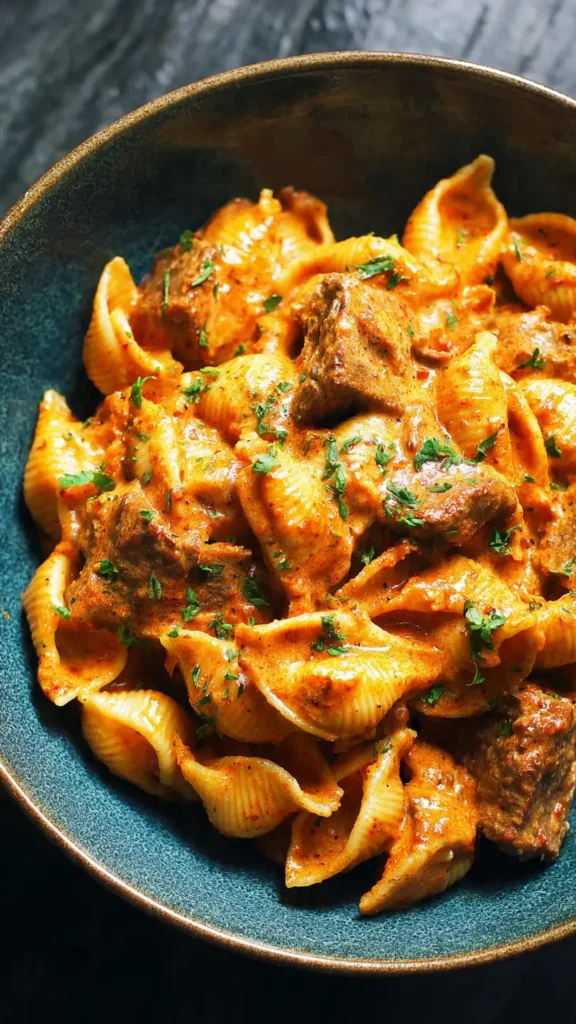
Step 6: Bring it all together Add the steak back to the pan along with any juices that accumulated on the plate. Toss in the partially cooked pasta shells and stir everything together. Let it cook on low for 3-4 minutes so the pasta finishes cooking and absorbs some of that gorgeous sauce. If it looks too thick, add pasta water a splash at a time. Stir in the Parmesan, taste, and adjust the salt and pepper.
Step 7: Serve it up Garnish with fresh parsley and maybe a little extra Parmesan if you’re feeling fancy. I usually serve this with a simple green salad or some crusty bread to soak up the sauce.
Pro Tips
The biggest game-changer for me was investing in a quality cast iron skillet for recipes like this. The even heat distribution means better searing on the meat, and it holds heat like a champ when you’re building that sauce. I use my 12-inch Lodge pretty much daily, and it’s outlasted three non-stick pans.
If you’re meal prepping (and I often make a double batch on Sundays), store the pasta and sauce separately in good meal prep containers. The pasta tends to absorb sauce as it sits, so you’ll want to add a splash of broth or cream when reheating. I usually portion this into four containers and it lasts about 4 days in the fridge.
For the paprika, quality matters more than you’d think. I get mine from a spice shop rather than the grocery store, and the flavor difference is night and day. It’s one of those small upgrades that makes a huge impact without breaking the bank.
Want to make this in an Instant Pot? Brown the steak using the sauté function, then add everything except the cream and pasta. Pressure cook on high for 8 minutes with a quick release. Stir in cream, add the dry pasta, and let it sit on the “keep warm” setting for 10 minutes. The residual heat cooks the pasta perfectly.
FAQs
Can I make this ahead? Absolutely. I make the sauce (up to the point before adding pasta) up to 2 days in advance. Store it in the fridge, then reheat gently and add freshly cooked pasta when you’re ready to serve.
What if I don’t eat beef? Chicken thighs work beautifully here. So does pork tenderloin cut into medallions. I’ve even made a vegetarian version with thick-sliced mushrooms and vegetable broth instead of beef broth.
How spicy is this? Not spicy at all, actually. Paprika is more about sweetness and smoke than heat. If you want some kick, add a pinch of cayenne or red pepper flakes when you add the paprika.
Can I freeze it? I don’t love freezing cream-based sauces because they can separate when thawed. If you must freeze it, undercook the pasta slightly more and expect to add extra cream when reheating.
What’s the difference between smoked and regular paprika? Smoked paprika (sometimes labeled as “pimentón”) has been dried over oak fires, giving it a deep, smoky flavor. Regular paprika is air-dried and tastes sweeter and more straightforward. They’re not exactly interchangeable, but in a pinch, you can substitute.
Recipe Info
| Metric | Time/Amount |
|---|---|
| Prep Time | 15 minutes |
| Cook Time | 30 minutes |
| Total Time | 45 minutes |
| Servings | 6 servings |
| Yield | About 8 cups |
Why You’ll Love This Recipe
This is the kind of recipe that makes you look like you spent hours in the kitchen when you really spent less than an hour total. It’s impressive enough for company but easy enough that I make it on random Wednesdays when I’m tired and don’t want to think too hard.
The texture contrast is what gets me every time. You’ve got tender steak, pasta that’s absorbed all that creamy, smoky sauce, and little pockets of Parmesan that get slightly crispy around the edges. Plus, it’s a complete meal in one pan, which means less cleanup and more time to actually enjoy dinner.
I’ve served this to picky kids (who shocked their parents by eating vegetables mixed in), to food snobs (who asked for the recipe immediately), and to my own family about a hundred times now. It just works.
What Makes This Recipe Unique
Most creamy pasta dishes rely on cheese or butter for richness. This one builds its flavor foundation on paprika and browned meat, which gives it a completely different flavor profile. It’s not Italian, it’s not French, it’s its own thing.
The technique of adding pasta directly to the sauce instead of tossing them together is something I picked up from risotto-making. The pasta releases starch as it finishes cooking, which naturally thickens the sauce and helps it cling to every shell. You can’t get that same result by cooking them separately.
Key Features
- One-pan meal (well, one pan plus the pasta pot)
- Ready in under an hour
- Scales easily for meal prep
- Kid-friendly despite the fancy name
- Works with multiple protein options
- Freezer-friendly if you plan ahead
- Uses pantry staples mostly
- Impressive presentation with minimal effort
Nutrition Facts
| Nutrient | Per Serving |
|---|---|
| Calories | 520 |
| Protein | 28g |
| Fat | 28g |
| Carbohydrates | 38g |
| Fiber | 2g |
| Sugar | 4g |
| Sodium | 420mg |
Note: These are estimates and will vary based on specific brands and portion sizes.
You’ll Also Love
If this recipe hits the spot, you’ll probably enjoy my Garlic Butter Steak Bites with Parmesan Cream Sauce (similar vibe, different pasta shape) or the Cajun Chicken Pasta that uses a lot of the same techniques with different spices. I’ve also got a Mushroom Stroganoff that’s basically the vegetarian cousin of this dish, and it’s become a reader favorite.
For sides, I usually pair this with my Quick Garlic Bread (made in the air fryer for crispy edges in 8 minutes) or a simple Arugula Salad with Lemon Vinaigrette. The peppery greens cut through the richness perfectly.
Conclusion
Here’s what I want you to take away from this. Creamy pasta doesn’t have to be complicated, time-consuming, or saved for special occasions. With the right technique and a good heavy skillet, you can have restaurant-quality results on a Tuesday night using ingredients you probably already have.
The first time you make this, follow the recipe pretty closely, especially the part about low heat when adding cream. Once you’ve got the technique down, feel free to experiment. I’ve added sun-dried tomatoes, swapped in different pasta shapes, used turkey instead of beef, and every version has been delicious in its own way.
Give it a shot this week, and let me know what you think. I’m willing to bet this becomes one of your regular rotation recipes, just like it has for me.
Happy cooking!
Linda